Publicis Groupe
Category
UIUX
Branding
Role
UX Design Intern
Location
Shanghai, China
Timeline
2023
Collaborator
Publicis Design Team
Genesis Marketing Team
Info
Genesis, Hyundai Motor Group’s luxury automotive brand. As Genesis expanded into the highly competitive Chinese EV market, the brand needed a website that could effectively communicate its premium identity while supporting product discovery for new audiences.
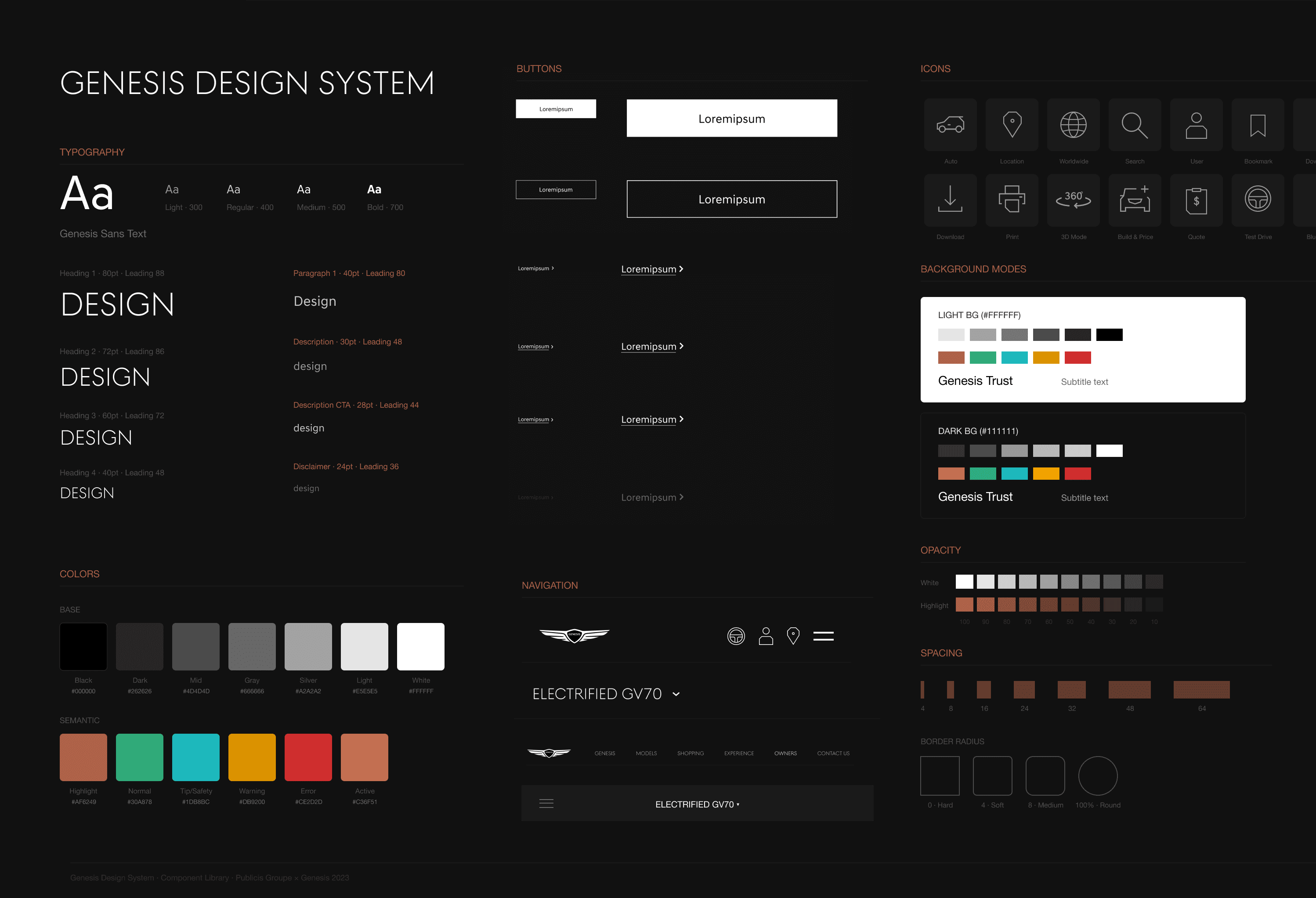
In this project, I worked on the design system, user flows, and interface design for Genesis’s web experience. I developed structural frameworks for the website, mapped user journeys for key experience pages, and designed high-fidelity UI layouts that combine cinematic brand storytelling with clear pathways for product exploration and user engagement.
The work demonstrates how strategic UX design can support both brand positioning and customer engagement in a competitive digital landscape.
Business Context
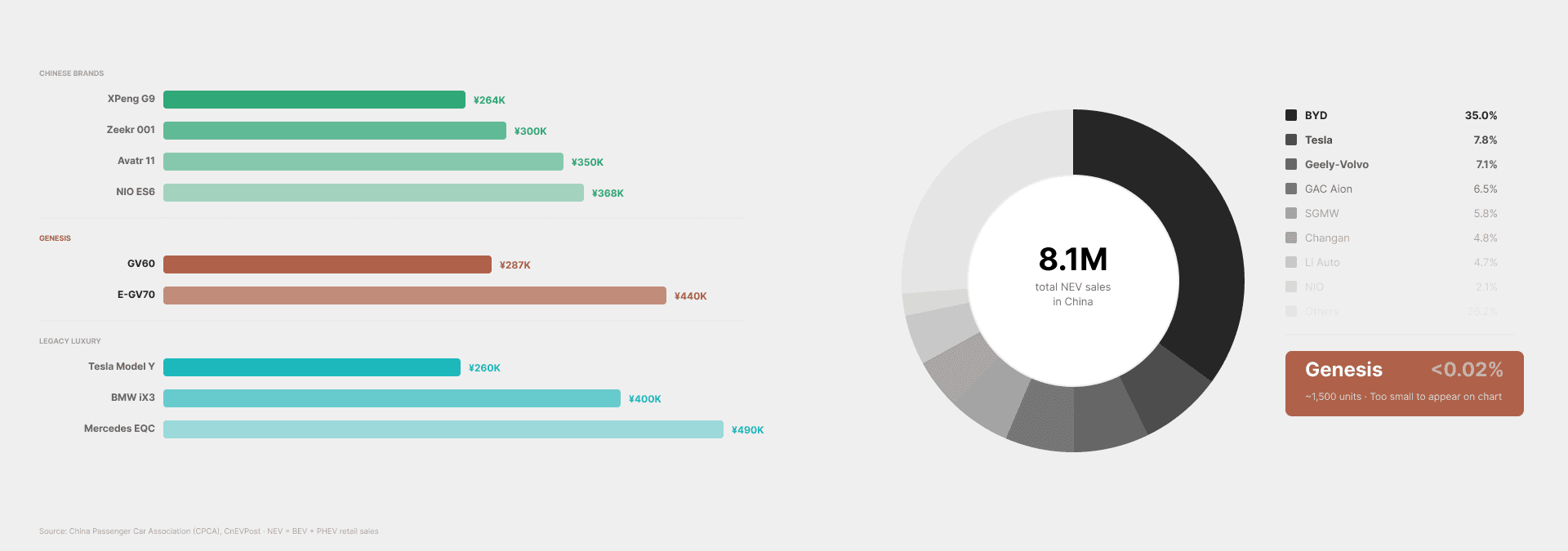
Brand Visibility Gap
Genesis enters the Chinese EV market with extremely limited brand recognition compared to dominant domestic players such as BYD, NIO, and XPeng.
The digital experience must therefore function as a primary channel for introducing the brand and establishing its premium identity.
Premium Positioning in a Data-Driven Market
Chinese EV buyers rely heavily on technical comparisons when evaluating vehicles.
Genesis must communicate its luxury design philosophy while still making key product information clear, accessible, and easy to explore.
Information Architecture
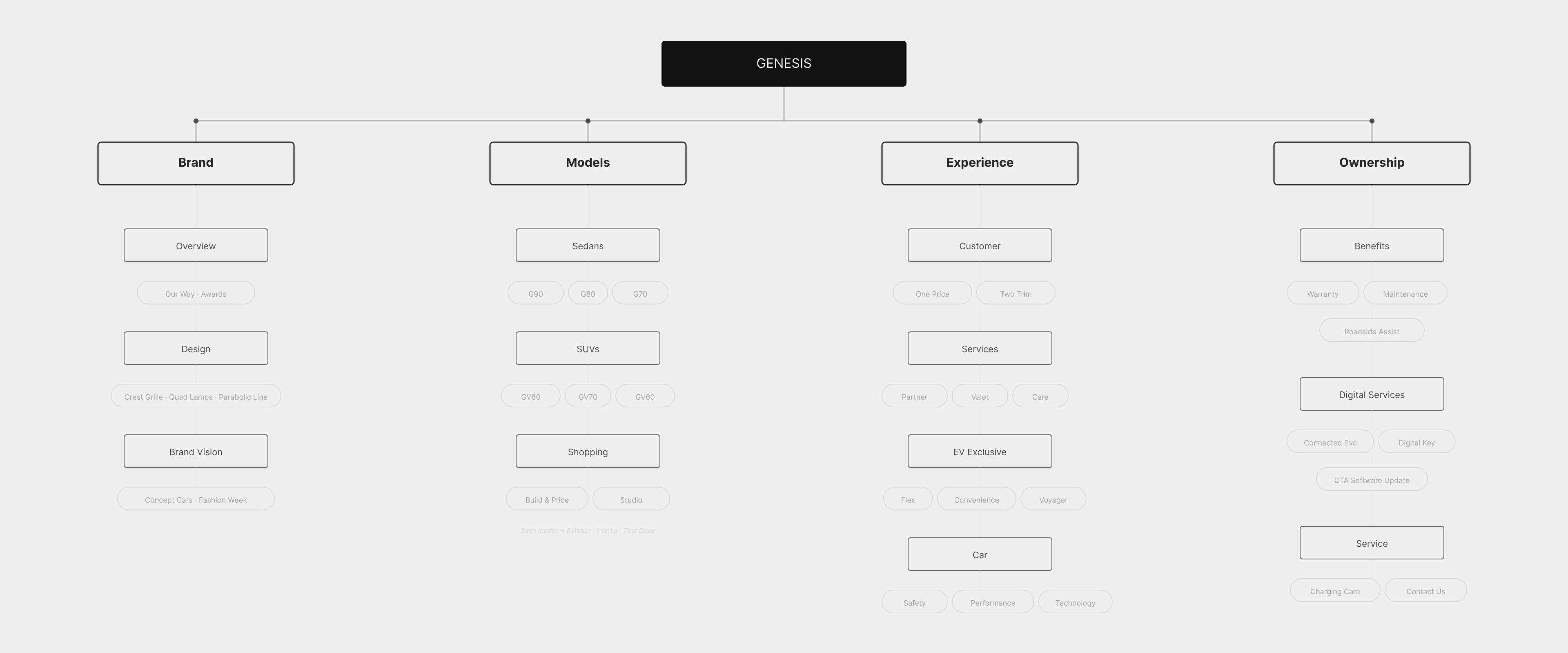
The site architecture was structured around four core domains; Brand, Models, Experience, and Ownership, to balance brand storytelling with product exploration and post-purchase services.
This framework allows new users to discover Genesis’s design philosophy while enabling prospective buyers to quickly navigate vehicle models, services, and ownership tools.
Experience Strategy
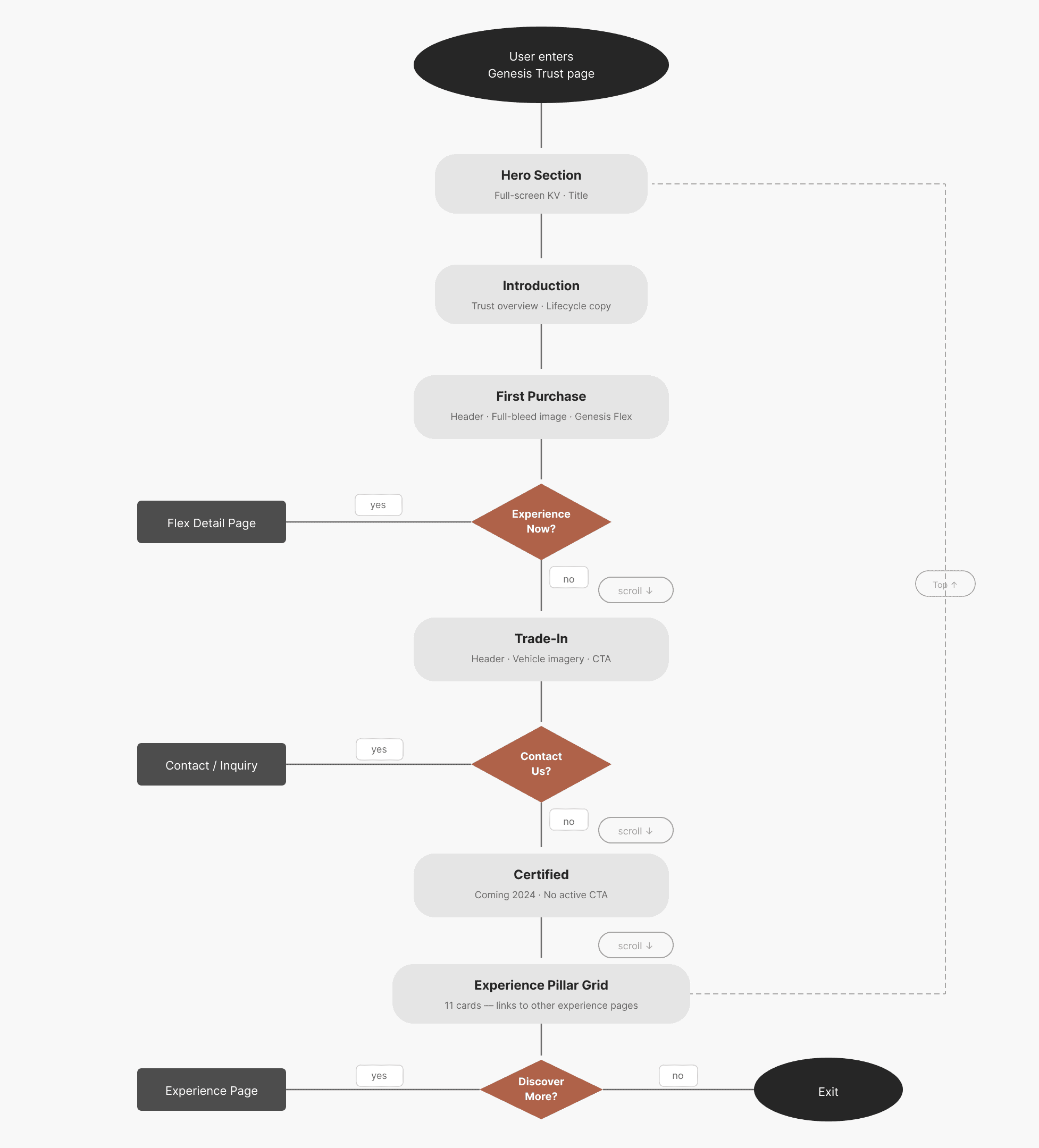
Narrative Flow and Decision Points
To address Genesis’s limited visibility in the Chinese EV market, the digital experience was designed to function as both a brand introduction platform and a conversion pathway for potential buyers.
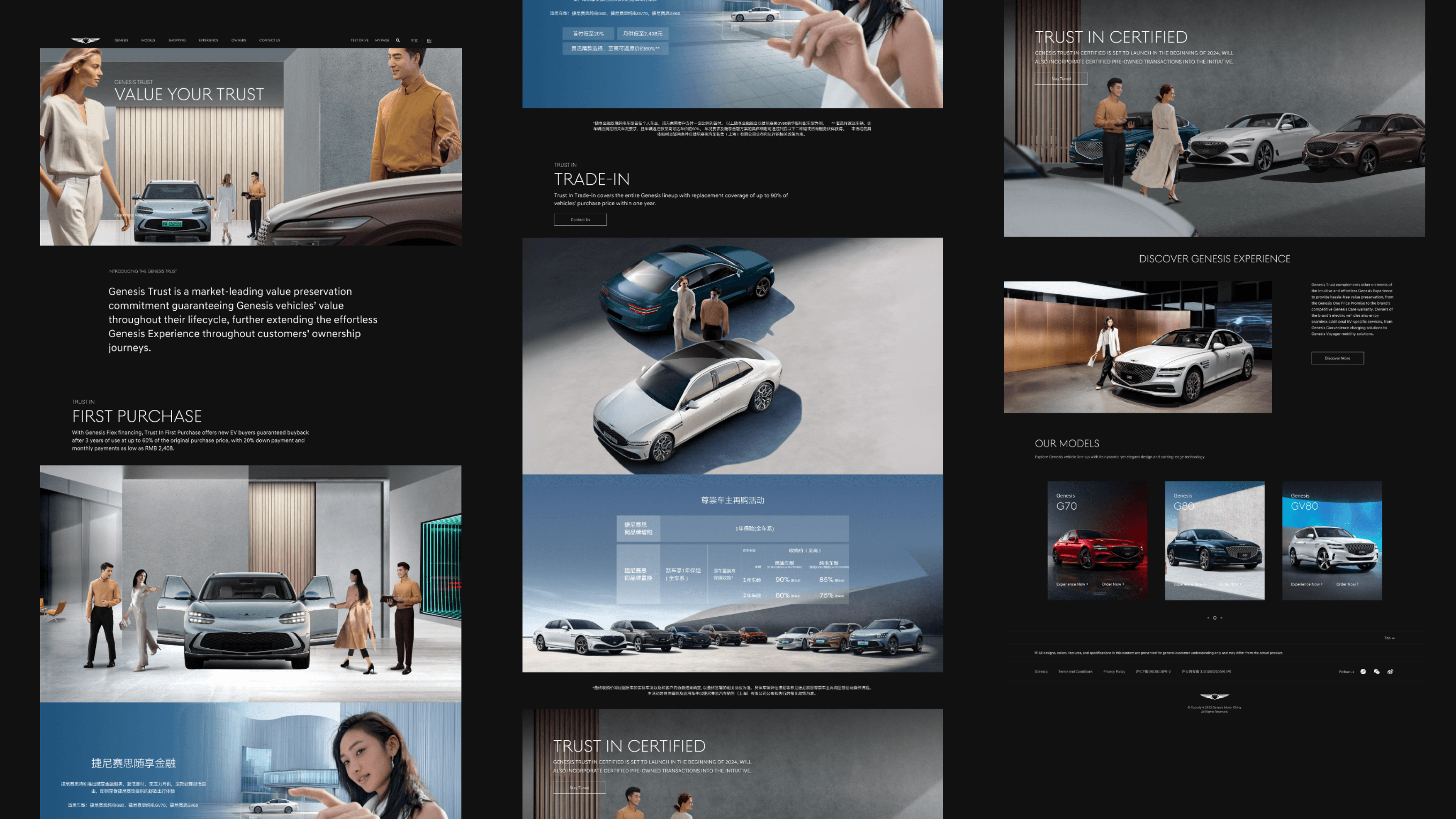
The Trust page was structured as a guided narrative experience, combining cinematic brand storytelling with progressive product discovery. High-impact visual sections introduce Genesis’s design philosophy and craftsmanship, while strategically placed decision points allow users to transition from passive exploration into deeper engagement.
The experience flow was designed to guide users through a sequence of brand storytelling, product introduction, and ownership incentives. Strategic interaction points allow users to either continue exploring the narrative or move directly toward deeper product engagement and contact actions.
Cinematic Product Presentation
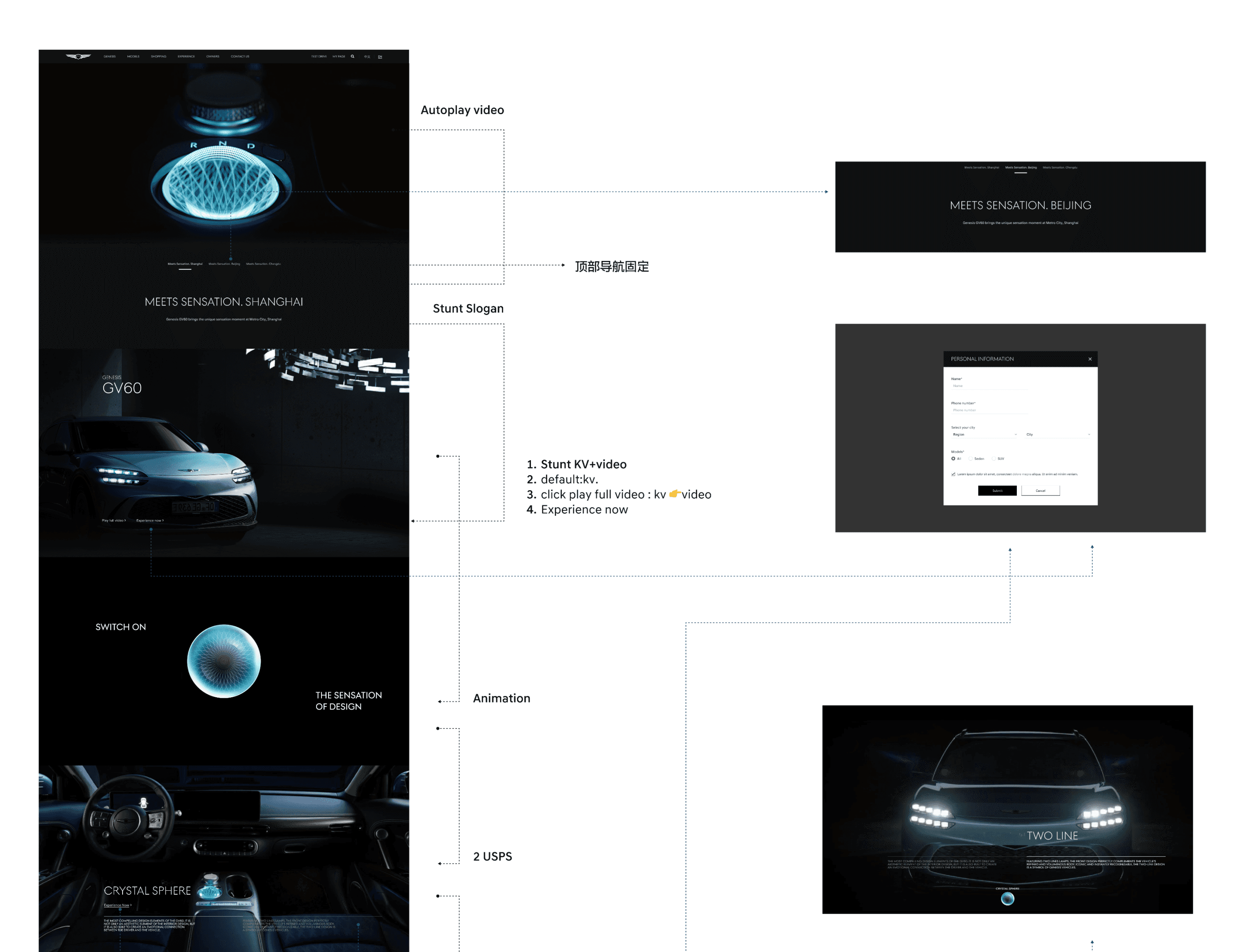
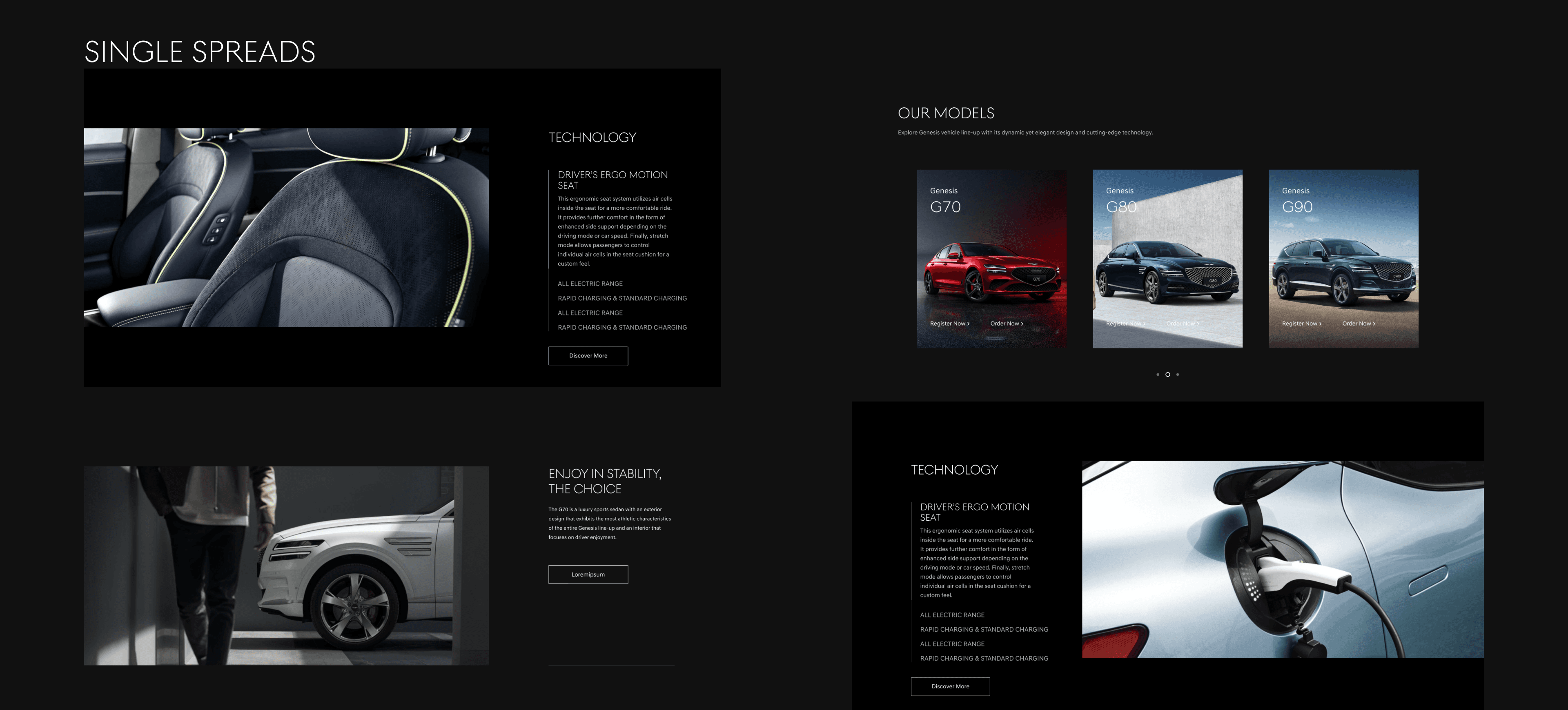
The interface emphasizes large-scale visuals, motion, and immersive media to communicate Genesis’s luxury positioning. Interactive elements, such as a video, animated transitions, and contextual calls-to-action, help translate brand storytelling into product exploration and inquiry.
Interface & Design System
Final outcome
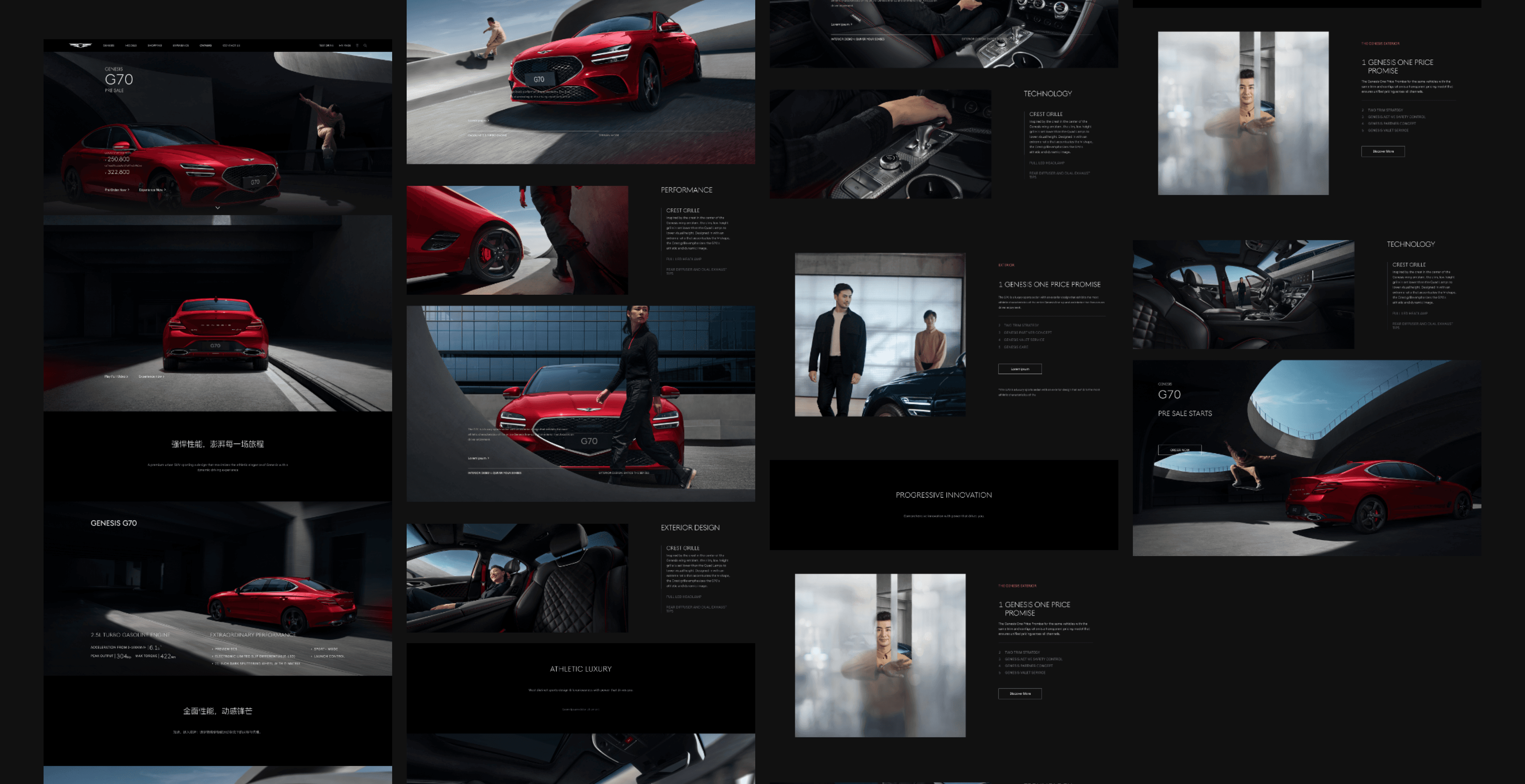
Reflections
This experience marked my first time working within a large corporate design environment. One of the most valuable skills I developed was a stronger sensitivity to brand systems: particularly color, typography, and visual consistency across digital platforms. I also gained a deeper understanding of the end-to-end process of designing and delivering a production website.
Working in an advertising agency required constant collaboration, not only with developers and product managers, but also through direct communication with clients. The pace and pressure of this environment were initially unexpected, but it ultimately taught me how to make design decisions under real constraints and present work clearly to stakeholders. This experience reinforced my understanding that design is not only about visual execution, but about balancing brand expression, collaboration, and business objectives.