MIRROR PONG
Category
XR
Role
Independent Researcher
Location
New York, NY
Timeline
2025
Collaborator
Single Project
Info
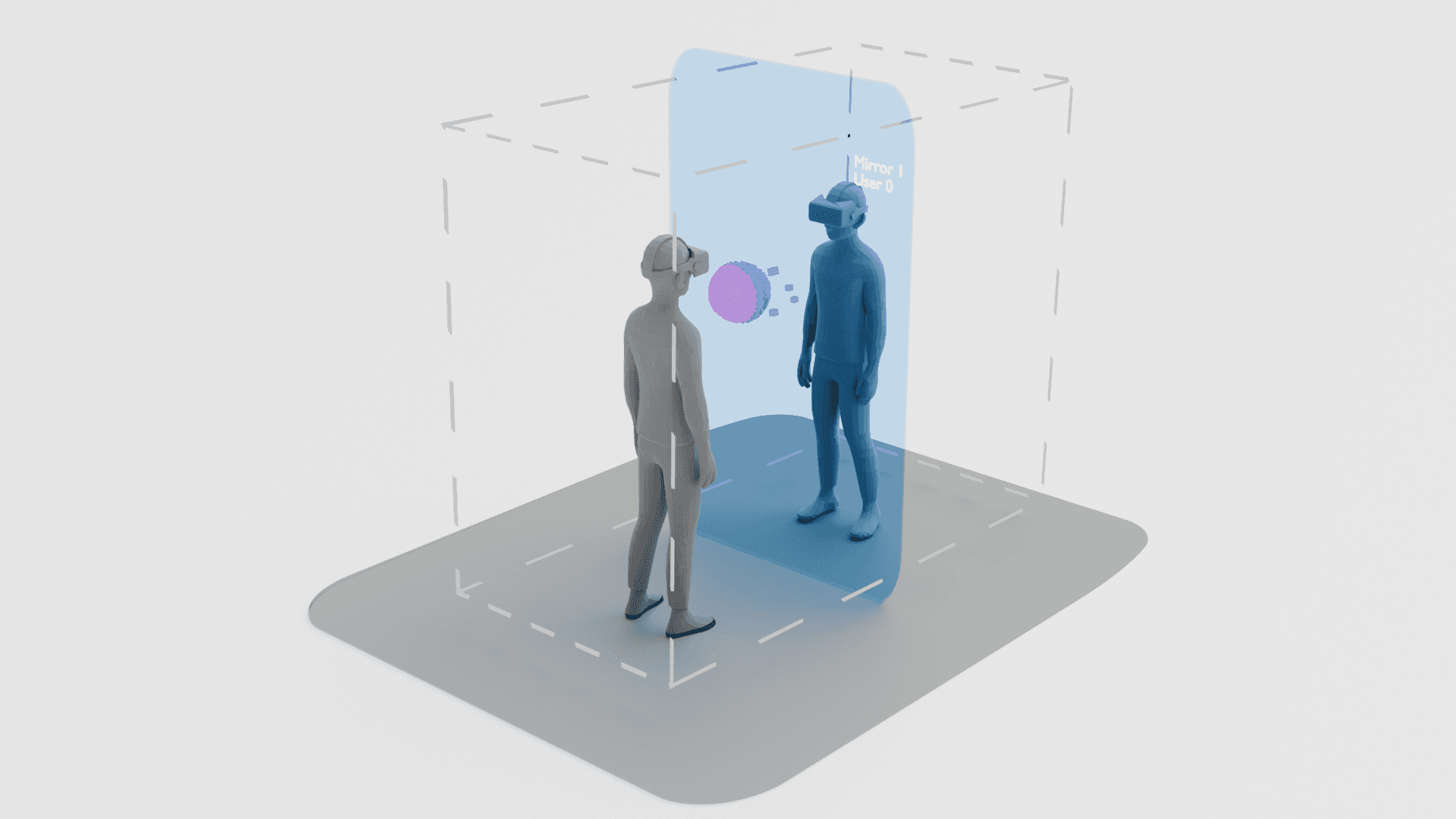
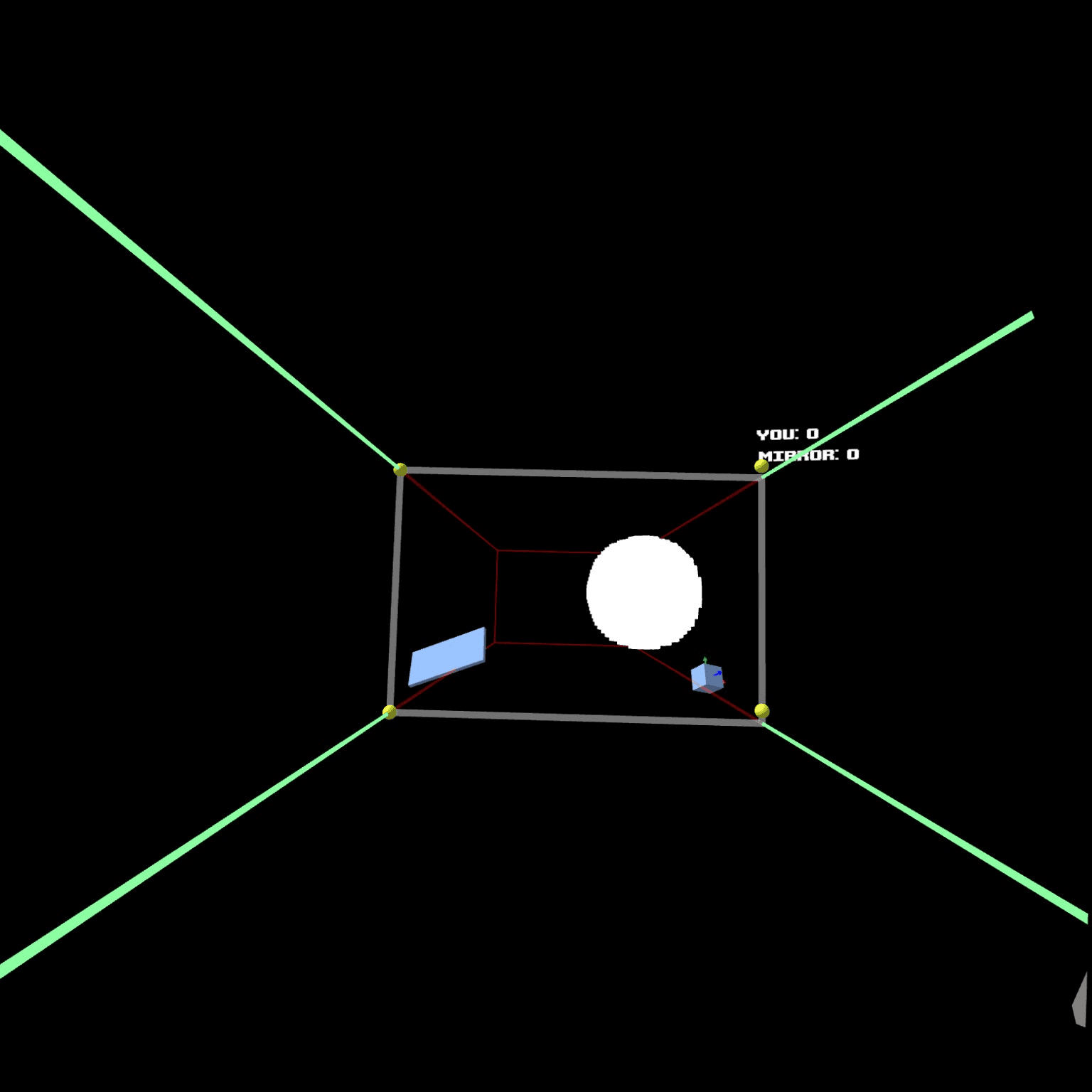
Mirror Pong is a single-player VR game that uses a virtual mirror as an active gameplay surface. The player controls two paddles simultaneously — one with their right hand in physical space (first-person perspective) and one with their left hand inside the mirror's reflection (second-person perspective). A ball travels continuously between the real and reflected worlds, requiring the player to shift between direct control and mirrored coordination.
The project was developed as independent research at the Cornell XR Lab, building on the lab's "Reflected Reality" framework. I designed and implemented the full game system, interaction mapping, depth-based scoring, visual language, and physics , using Unity and the XR Interaction Toolkit, extending the lab's existing stencil shader and portal rendering infrastructure.
Final outcome
Project Statement
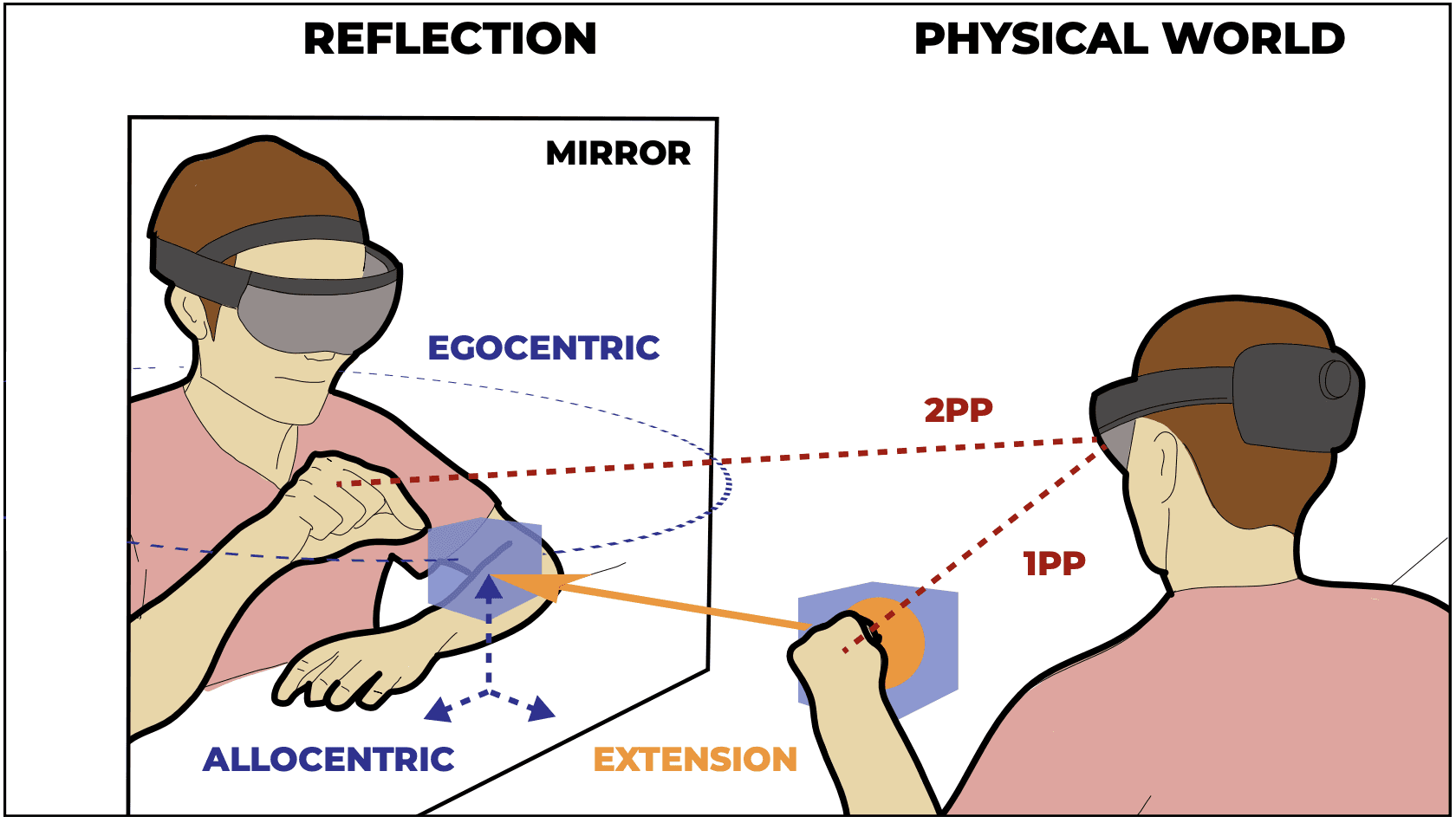
Most VR interactions happen from a single viewpoint: the user looks at their hands and manipulates objects directly in front of them. But what happens when you have to act through your reflection?
Reflected Reality is a concept where a smart mirror and an AR headset collaborate to extend physical space into its reflection. The mirror becomes more than a reflective surface. it's a portal to an interactive environment where the user's body exists twice: once in the physical world and once as an active, controllable reflection.
Mirror Pong was designed to test the limits of this idea. By splitting gameplay across the mirror boundary, the project investigates how people manage dual spatial awareness , coordinating actions they can see directly with actions they can only see through a reflected intermediary.
Design
The player defines a virtual plane in their space that acts as the boundary between the "real" and "reflected" worlds. Everything on one side is first-person; everything on the other side is mirrored. The plane is visualized with a wireframe grid so the player can judge depth and orientation.
The right hand controls the paddle in physical space — standard direct manipulation. The left hand controls a paddle inside the mirror. To intercept the ball on the reflected side, the player has to focus on their reflection rather than their actual hand, essentially operating a remote avatar of themselves.
The ball is a physics-based object that travels continuously between real and reflected space. Scoring is depth-based: if the ball passes the deepest point of your reach in the real world, the reflection scores, and vice versa. This forces the player to maintain awareness of both spaces simultaneously.
Reflections
This project expanded my understanding of spatial interaction design beyond standard VR direct manipulation. Designing for simultaneous first- and second-person perspectives required rethinking assumptions about body ownership, attention, and spatial reference frames, problems that don't surface in typical VR development.
Through live testing, I identified two key areas for iteration. The ball's transition across the mirror boundary can be visually jarring, some testers lost track of the ball as it crossed. Future versions would use color shifts or spatial audio cues to signal which "world" the ball occupies. I also prototyped a "Challenge Mode" that transforms the environment into a fully virtual space when the score is tied, but the transition between passthrough and virtual rendering remains unstable. Solving this requires deeper work on the plane logic to allow seamless fading without breaking the reflection illusion.