DIPLOMASK
Category
HCI
AI
Role
Technical Lead
Location
New York
Timeline
2025
Collaborator
Chris Ye, Cheng Peng
Info
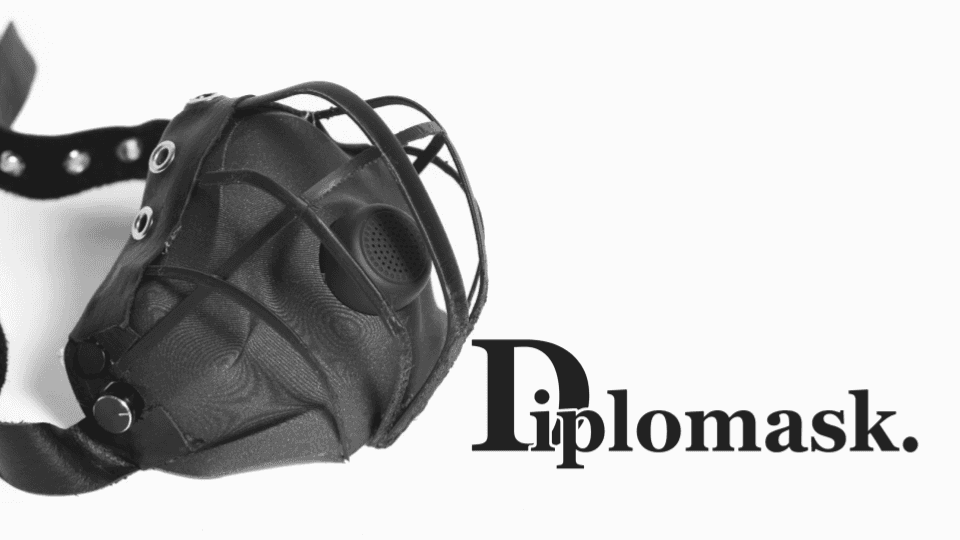
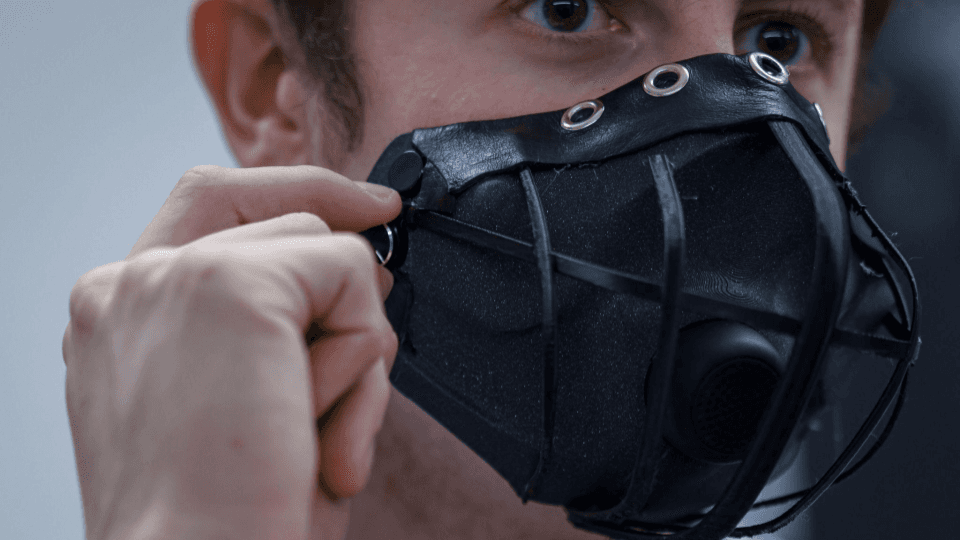
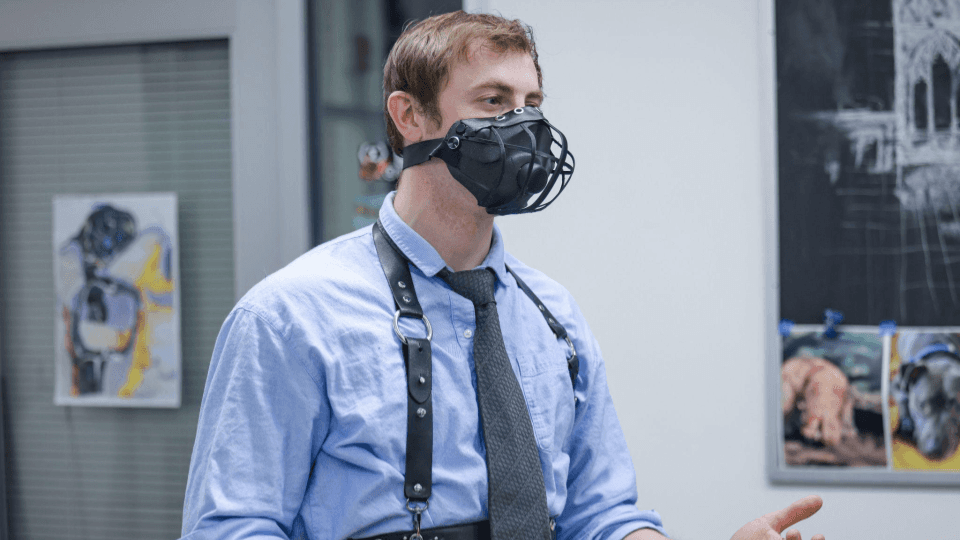
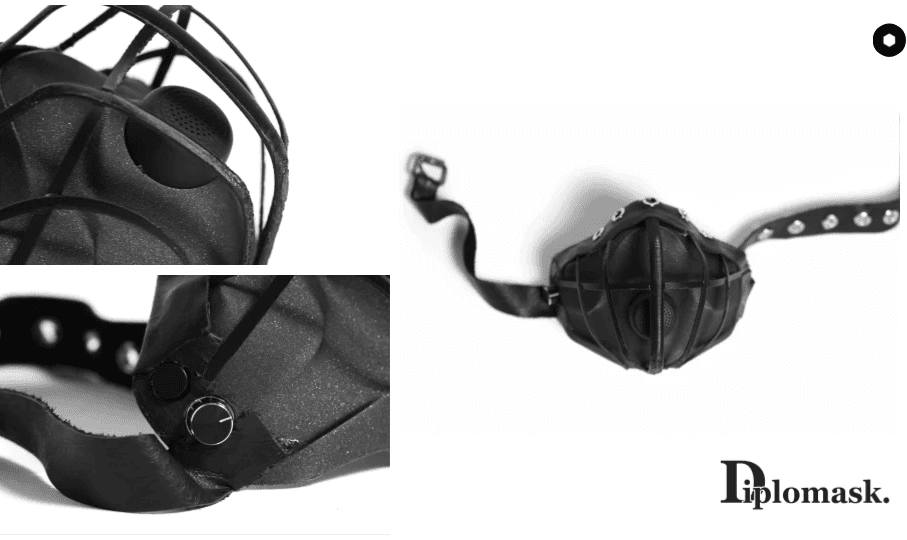
Diplomask is a speculative wearable device that explores the growing influence of AI in shaping how people communicate in professional environments. The soundproof mask captures the wearer’s speech, processes it through a large language model, and outputs a refined version of the message translated into corporate-style language. A dial on the mask allows the wearer to adjust the tone of the generated speech across three modes tailored for different workplace hierarchies.
In this project, I was primarily responsible for building the hardware circuitry and physical prototype, integrating Arduino-based audio processing, and connecting the system to LLM APIs through custom software and programming. The result is a functional wearable interface that demonstrates how AI systems can actively mediate human communication.
The project was published in Technology | Architecture + Design (TAD), exhibited at Cornell Ithaca and Roosevelt Island, and later cited in faculty research exploring AI-mediated communication.
Final outcome

Project Statment
Corporate workplaces increasingly rely on specialized jargon to signal professionalism and authority. While intended to streamline collaboration, this language often obscures meaning and creates barriers for non-native speakers, early-career workers, and those unfamiliar with institutional communication norms.
Diplomask examines this phenomenon by exaggerating the transformation of plain speech into corporate language. By automating this process through AI, the project highlights how workplace communication can become performative, raising questions about authenticity, accessibility, and the power structures embedded within professional language.

Technical Architecture
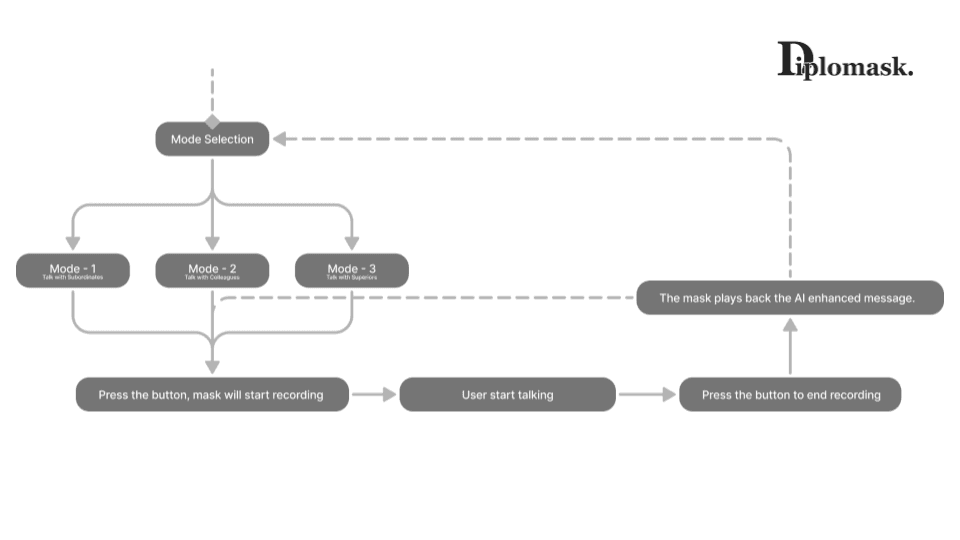
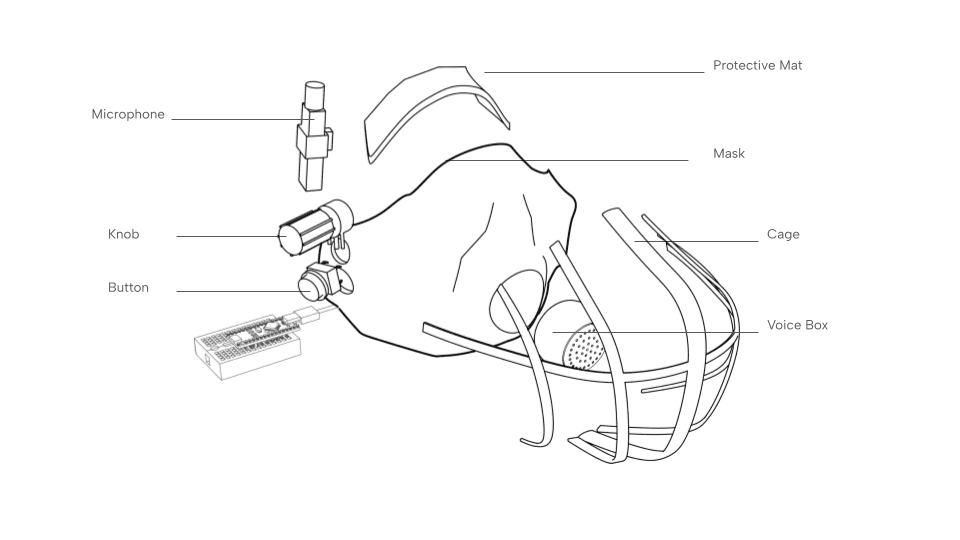
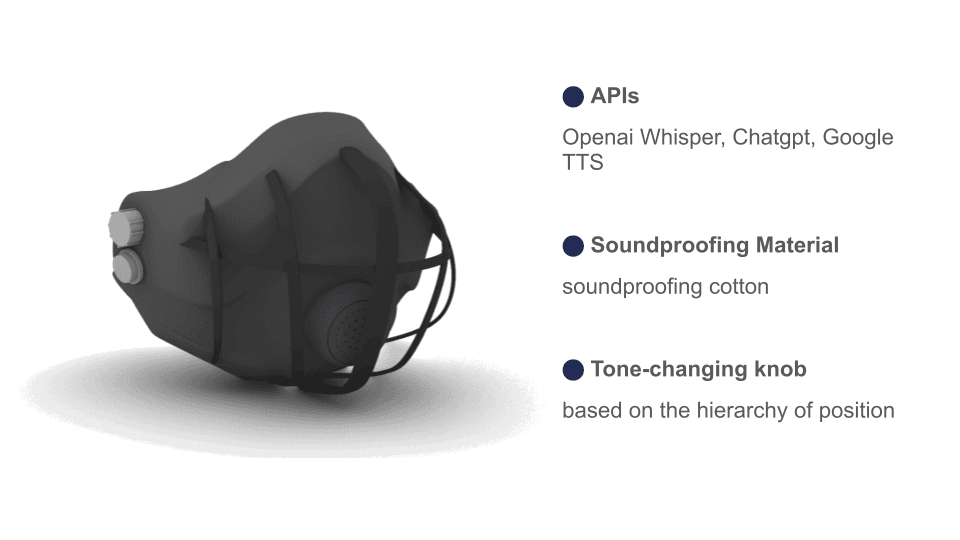
The project integrates three powerful APIs: OpenAI Whisper, which converts spoken audio into text; ChatGPT, which comprehends and transforms the text into exaggerated corporate jargon; and Google Text-to-Speech (TTS), which vocalizes the transformed speech with precision.
To ensure the user's original words remain private, the mask is lined with soundproof cotton, effectively isolating external sound. A thoughtfully designed knob on the side of the mouthpiece allows users to seamlessly switch between three distinct modes, enabling them to tailor their tone to the hierarchy of their audience—whether addressing subordinates, peers, or superiors. This dynamic functionality underscores the mask’s playful critique of workplace communication norms.
Reflections
This project significantly expanded my technical experience working with AI APIs, prompt design, and agent-based applications, while also strengthening my ability to build physical prototypes integrating hardware and software systems. Developing the wearable device required combining electronics, programming, and interaction design into a single functional system.
Working within the timeframe of an academic studio also reinforced the importance of structured workflows, collaboration, and time management, demonstrating how complex speculative concepts can be translated into tangible interactive prototypes.